.png)
Hard Truths About B2B Marketing (That Most People Don't Want to Hear)

Let me guess. You're reading this because you feel like your B2B marketing efforts just aren't working.
Maybe you're thinking "I'm struggling to get my business to stand out." Or perhaps you've caught yourself saying "We don't have a lot of budget to do marketing" or "I don't have time to be consistent with marketing."
If any of those thoughts have crossed your mind lately, you're not alone. I've sat across from countless B2B founders and marketing managers who've shared these exact frustrations.
But there's a path forward that doesn't require a massive budget or going viral on LinkedIn.
Let's get into it.
The Problem With B2B Marketing (It's Not What You Think)
Here's what most people get wrong about B2B content marketing: they think it's about promotional fluff, spamming everyone with direct sales messages, or finding that one magical LinkedIn post that lands a five-figure deal. It's not.
Real B2B content marketing is something entirely different. It's about sharing genuinely helpful educational information that your audience actually wants. No hard sell required.
Think about it this way: it's the slow-burn approach to marketing that doesn't cost much but requires patience. When you consistently share valuable insights, your audience grows to trust you, returns for more, and naturally thinks of you first when they need what you offer.
So how do you do this?
Start By Actually Knowing Your Audience
Before you write another blog post or craft another LinkedIn update, stop.
Ask yourself these questions:
What job titles are you targeting?
What industries?
What company sizes?
Where are they located?
Most importantly, what are their pain points?
If you can't answer these questions clearly, you're essentially creating content in the dark. And here's the brutal truth: if you don't understand your audience, you likely won't bring in sales.
This is where most content strategies fall apart. You need to actually talk to your audience. Not just assume you know what they want, but have real conversations. Sales calls are a goldmine for understanding customer pain points.
How to Generate Content Ideas
Stuck on what to create? Here are five proven approaches that don't require a creative genius or unlimited time:
1. Mine Your Sales Conversations Every sales call you have is packed with content gold. What questions do prospects ask repeatedly? What objections come up? Turn these into content that addresses these real concerns.
2. Tap Into Online Communities LinkedIn groups, Reddit threads, industry forums. See what questions people are asking in your niche. Then answer them thoughtfully in your content.
3. Poll Your Audience Use LinkedIn polls or simple surveys to ask your audience what they want to know. Let them tell you exactly what content to create.
4. Repurpose What Works Look at your existing content that performed well and approach it from a different angle. One good idea can become multiple pieces of content.
5. Interview the Experts Talk to subject matter experts in your space. What trends are they seeing? What advice would they give? These conversations often become your most valuable content.
High Impact, Low Effort Content Types
Not all content is created equal. If you're stretched for time (and who isn't?), focus on these five content types that deliver the biggest bang for your buck:
LinkedIn Posts are your B2B marketing MVPs. Founders consistently report these are their best marketing assets. People buy from people, not logos.
Blog Posts let you answer common questions, explain your thinking, and showcase your expertise in depth.
Email Newsletters keep your best content in front of subscribers who've already shown interest.
Use Cases share specific examples of how your product or service solves real problems.
Case Studies tell complete success stories, keeping them human and relatable.
Marketing, Meet Sales
Here's where things get interesting. The magic happens when your content marketing and sales efforts overlap. That intersection is your sweet spot.
Your content shouldn't exist in isolation from your sales process. Instead, it should feed directly into it.
Every piece of content should either educate prospects about problems you solve or demonstrate your expertise in solving them.

Don't Drive Yourself Nuts with Metrics
Let's talk metrics. For each content type, it's important to track what actually matters to you that makes you feel like you're progressing.
But here's the critical part: look at monthly averages and compare them over time.
Analyze your performance every three months, not every day.
Do not obsess over each individual post. Trust me, you will go crazy.
The Role of AI (It's Not What You Think)
AI tools are everywhere now, and yes, they can help with content creation.
But here's the thing: you know your audience's pain points and your business better than any AI tool ever will. AI just helps you say it better and faster.
Use AI as your writing assistant, not your strategy brain. The insights, experiences, and understanding of your customers? That's all you.
Why Consistency Beats Cleverness Every Time
Here's the reality check: consistency is key. It takes a minimum of three months to test any content approach properly.
You don't need to go viral. You need to show up regularly. B2B doesn't have to be boring, but it doesn't need to be flashy either. Don't be afraid to bring personality to your content, but focus on being helpful first.
Content creation is experimental. You'll learn more from actually posting and seeing what resonates than you ever will from endless planning sessions.
Be realistic about what you can manage. You're better off consistently posting once a week than burning out trying to post daily.
The Long Game
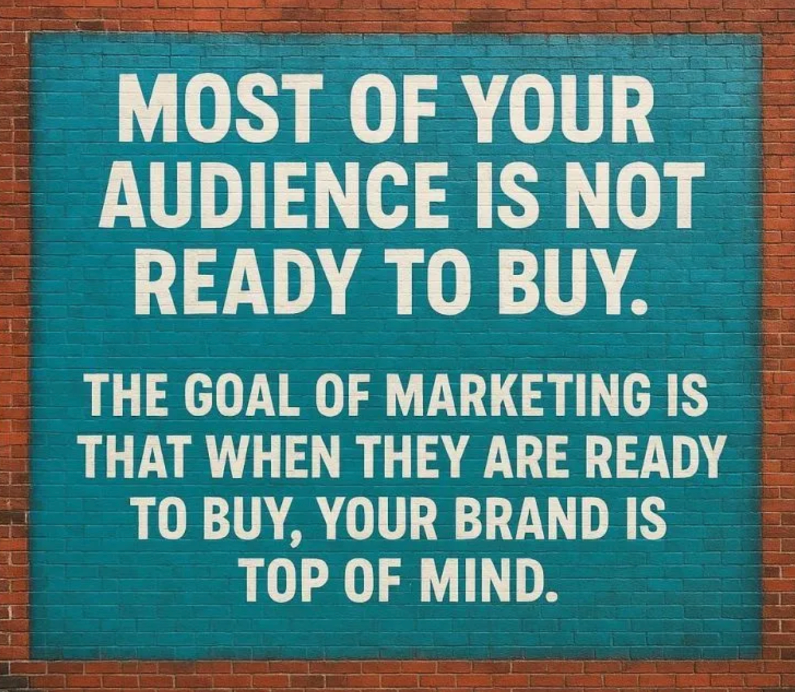
Most of your audience isn't ready to buy right now. That's not a bug in your marketing system, it's reality.
The goal of your content marketing isn't to turn every reader into an immediate customer.
The goal is that when your audience members are ready to buy, your brand is top of mind. That happens through consistent, helpful content that builds trust over time.
Your content marketing is working even when it doesn't feel like it. Every helpful post, every insightful newsletter, every case study that resonates is making deposits in your brand's trust account.
Start Where You Are
Look, B2B content marketing isn't rocket science, but it's not always easy either. It requires showing up consistently, understanding your audience deeply, and focusing on being genuinely helpful rather than clever.
The businesses that succeed with content marketing are the ones that play the long game. They understand that building trust through valuable content takes time, but the payoff is customers who come to you pre-sold and ready to work with someone they already trust.
Start with one content type. Get consistent with it. Listen to your audience's feedback. Adjust based on what you learn. Repeat.
Your future customers are out there right now, searching for solutions to problems you can solve. The question is: will they find helpful content from you, or will they find your competitors instead?
The choice is yours. But the time to start is now.
Need help with your B2B content marketing? Don't hesitate to reach out to us; we can chat about your content marketing needs and see if we can help!